



If you are looking to maximize your calorie burn and shave minutes off your workout routine, incorporating HIIT exercises treadmill sessions can be the ultimate game-changer. Pairing your workouts with protein-rich foods can also support muscle recovery and help you maintain your fitness goals. This method, known as high-intensity interval training, is designed to push your body to its limits in short bursts, followed by active recovery, making it one of the most efficient ways to improve cardiovascular health and shed fat.
Below, we break down everything you need to know about the HIIT treadmill workout, including a detailed routine, safety tips, and the science behind why it works so well.
Why HIIT Exercises Treadmill Workouts Are Superior for Calorie Burn
The primary reason people turn to HIIT exercise treadmill routines is the “afterburn” effect, scientifically known as Excess Post-exercise Oxygen Consumption (EPOC). Unlike steady-state cardio, which burns calories only while you are moving, high-intensity intervals keep your metabolism elevated for hours after you step off the machine. However, avoiding common beginner exercise mistakes is important to ensure you train safely and get the most from your workout. This means you continue torching calories while you recover, shower, or even sleep.
The Science Behind the Method
- Short Bursts: Sprinting or running at 80-90% of your maximum heart rate for 30 to 60 seconds.
- Active Recovery: Slowing down to a brisk walk or light jog to bring your heart rate down.
- Repetition: Repeating this cycle 8 to 12 times creates a potent metabolic stimulus.
The Ultimate 20-Minute HIIT Treadmill Routine
You don’t need an hour to get a great workout. Here is a simple, effective 20-minute session you can follow right now.
| Phase | Time | Speed/Incline | Intensity |
|---|---|---|---|
| Warm-Up | 5 Mins | Slow Jog (3-4 mph) | Low |
| Work Interval | 60 Secs | Sprint (8-10 mph) or High Incline (10-12%) | Maximum |
| Recovery | 90 Secs | Brisk Walk (2-3 mph) | Low |
| Work Interval | 60 Secs | Sprint (8-10 mph) or High Incline (10-12%) | Maximum |
| Recovery | 90 Secs | Brisk Walk (2-3 mph) | Low |
| Repeat | 8x Total | Continue the cycle | Variable |
| Cool-Down | 5 Mins | Walking (2 mph) | Very Low |
Pro Tip: To avoid injury, always hold the handrails lightly (if needed) during the sprint phases, but rely on your core strength to maintain balance.
Safety First: Avoiding Common Mistakes
While HIIT exercises treadmill workouts are incredibly effective, they are also high-impact. It is crucial to listen to your body.
- Proper Footwear: Wear shoes with adequate cushioning to absorb the shock of sprinting.
- Form: Keep your shoulders back and look forward, not down at the console.
- Frequency: Limit these sessions to 2-3 times per week to allow your muscles and joints to recover.
Modifications for Beginners
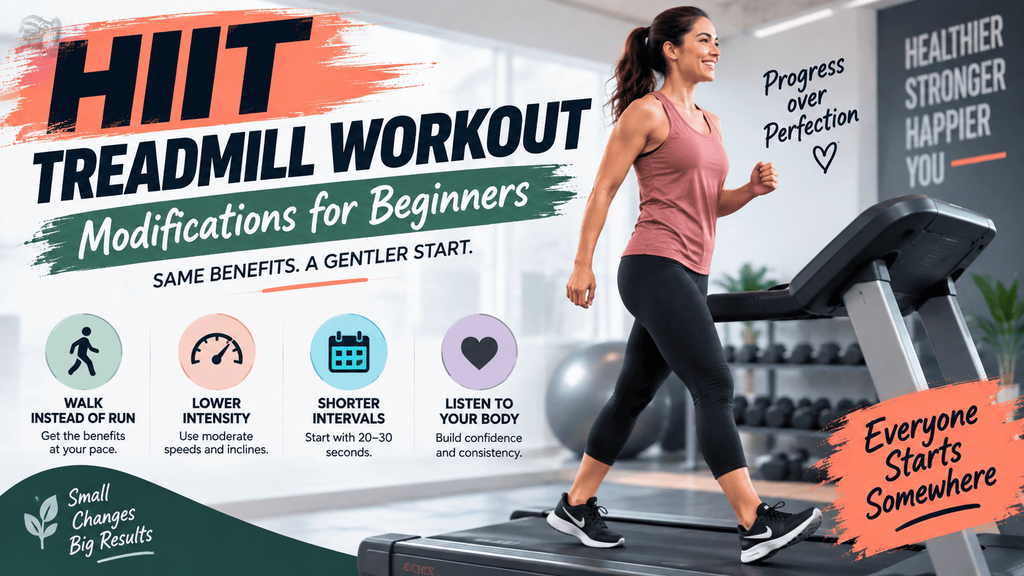
If you are new to HIIT, don’t dive straight into a sprint. Modify the workout to suit your current fitness level.
- Reduce Speed: Instead of sprinting at 8 mph, start with a fast jog at 5-6 mph.
- Increase Recovery Time: Extend your recovery period to 2 minutes rather than 90 seconds.
- Shorten Sprints: Start with 30-second work intervals and 2-minute recoveries.
Frequently Asked Questions (FAQs)
Q: Is 20 minutes of HIIT on a treadmill enough?
A: Yes! Because of the high intensity, 15 to 20 minutes is often more effective than an hour of moderate jogging. It provides excellent cardiovascular benefits and significant calorie burn.
Q: Should I use speed or incline for my intervals?
A: Both are effective. Increasing the speed taxes your fast-twitch muscle fibers, while increasing the incline (hill sprints) is slightly safer for the knees and builds muscle strength in the glutes and hamstrings.
Q: How many calories does a HIIT treadmill workout burn?
A: Depending on your weight and intensity, you can burn between 200 to 400 calories in a 20-minute session, plus the additional 100-150 calories burned during the afterburn phase.
Q: Can I do HIIT on a treadmill every day?
A: It is not recommended. HIIT stresses the central nervous system and muscles. For best results, alternate HIIT days with strength training or low-intensity steady-state (LISS) cardio.
Conclusion
The HIIT exercises treadmill approach is a powerful tool for anyone looking to maximize efficiency in their fitness journey. Combining regular exercise with a healthy mental diet can also support overall well-being and help you maintain a balanced lifestyle. By following the structured routine above, you can achieve better results in less time, improve your endurance, and enjoy the benefits of a higher metabolism long after you finish your workout.
Remember, consistency and proper form are the keys to success. Start slow, track your progress, and gradually increase the intensity as your stamina improves.
Ready to try this routine? Lace up your sneakers, hop on the treadmill, and watch the calories melt away in just 20 minutes!

