
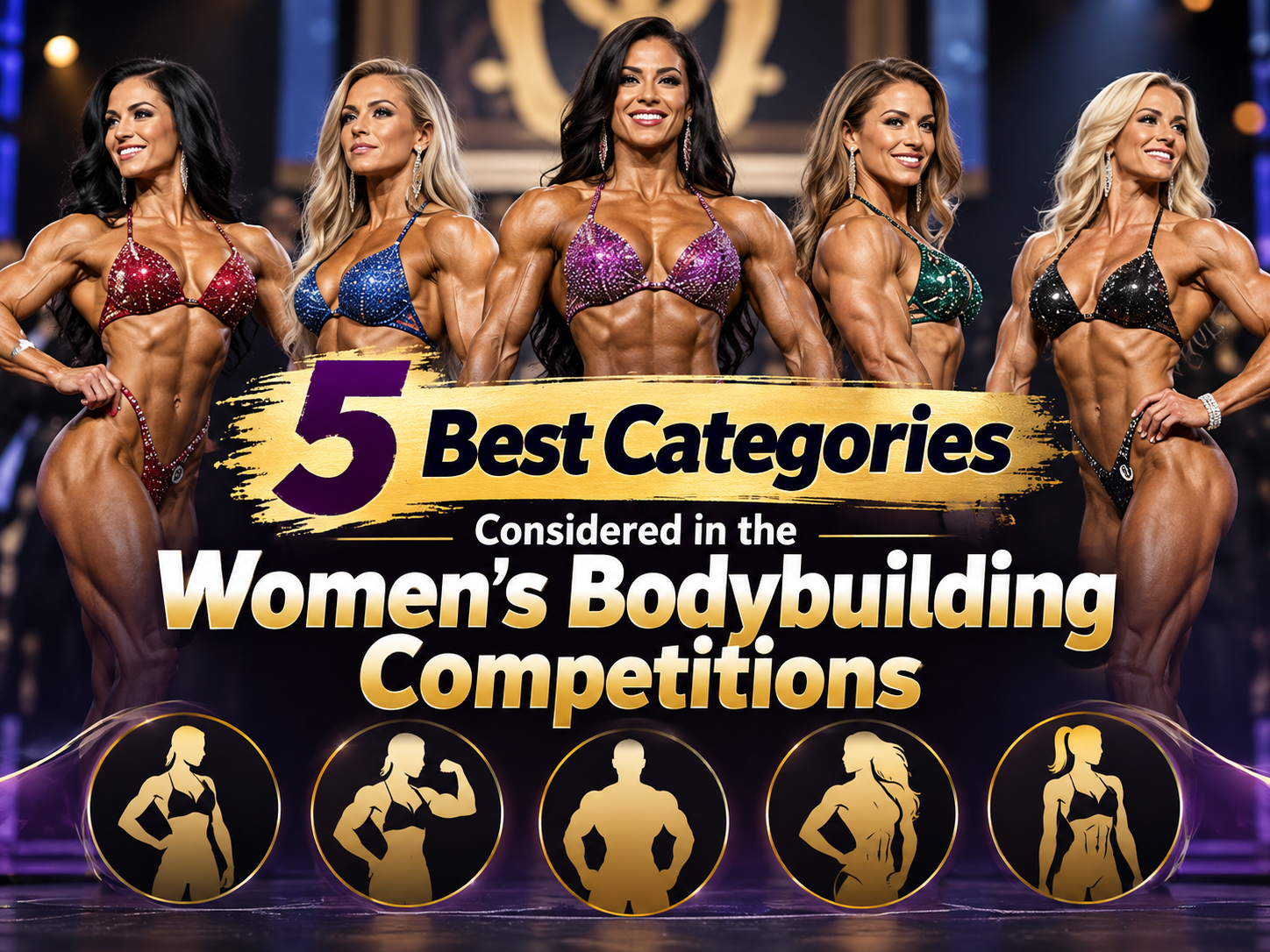
Women’s bodybuilding has come a long way since its official recognition in the late 1970s and early 1980s. What began as a niche pursuit has evolved into a global phenomenon where female athletes showcase not only muscle development but also artistry, discipline, and stage presence. Today’s competitions offer multiple pathways for women to compete, each celebrating a different expression of strength and aesthetics. This guide breaks down the five most prominent categories—and why they matter in 2026.
The Big Five: Women’s Bodybuilding Divisions
1. Bikini Division
The most accessible entry point into competitive bodybuilding.
Since its introduction by the IFBB in 2010, the Bikini Division has become the largest and most popular category in women’s bodybuilding. It celebrates a lean, toned, and athletic look rather than maximum muscle mass .
What Judges Look For:
- Balanced shoulders and hips with a narrow waist
- Firm glutes and toned arms without visible striations
- Grace, confidence, and stage presence
- Overall symmetry and proportion
Competitors wear two-piece bikinis and high heels, adding a touch of glamour to the stage. The Bikini Division appeals to women who want to compete without the extreme muscle-building demands of other categories. Recent champions like Aimee Delgado have elevated the division’s profile, with top prizes at events like the Arnold Classic reaching $25,000 .
2. Figure Division
The sweet spot between muscularity and aesthetics.
The Figure Division sits one step above Bikini in terms of muscle development. Athletes display greater muscle density, particularly in the shoulders, back, and legs, while maintaining a feminine, balanced physique.
Key Judging Criteria:
- V-taper shape with broad shoulders tapering to a narrow waist
- Defined muscle separation without extreme hardness
- Balance and symmetry across all muscle groups
- Quarter-turn posing rather than freestyle routines
For many female athletes, Figure offers the ideal middle ground—enough muscle to show serious training dedication without the bulk required in Physique or Bodybuilding. It remains one of the most competitive divisions at both the IFBB and NPC levels.
3. Fitness Division
Where athletic performance meets physique assessment.
The Fitness Division is unique: it’s the only category where competitors must demonstrate athletic prowess on stage in addition to presenting their physiques. Athletes perform a two-minute choreographed routine incorporating gymnastics, dance, flexibility, and strength elements.
Scoring Breakdown:
- 50% physique evaluation (conditioning, muscularity, symmetry)
- 50% performance routine (difficulty, creativity, stage energy)
This division demands the most versatile training regimen—athletes must balance intense weight training with gymnastics or dance practice. At the 2026 Arnold Classic, Michelle Fredua-Mensah claimed the Fitness International title, continuing her dominance after winning Ms. Olympia in 2025 .
4. Women’s Physique Division
The bridge between Figure and traditional Bodybuilding.
Launched in 2013, Women’s Physique allows athletes to showcase more muscle mass and conditioning than Figure, but with less extremity than Open Bodybuilding. Competitors display visible vascularity, striations, and muscle separation while maintaining an overall harmonious appearance.
What Sets It Apart:
- More muscular than Figure, less extreme than Bodybuilding
- Mandatory poses include front double biceps, side chest, and abs/thighs
- Emphasis on symmetry, muscle maturity, and stage presence
The division gained prominence through champions like Dana Linn Bailey, the first Women’s Physique Olympia winner in 2013. Today, athletes like Natalia Abraham Coelho continue to push the boundaries of what’s possible in this category .
5. Women’s Open Bodybuilding (Ms. Olympia)
The pinnacle of female muscle development.
The oldest and most prestigious women’s bodybuilding division, Women’s Open Bodybuilding represents the ultimate test of muscular size, conditioning, and symmetry. There are no weight restrictions—the bigger, more shredded, and more conditioned, the better.
Judging Standards:
- Maximum muscle mass and density across all groups
- Sharp conditioning with visible striations and vascularity
- Proportion, symmetry, and the ability to hit dramatic poses
- Longer posing routines that highlight strength and uniqueness
Andrea Shaw has dominated this division since 2020, securing her seventh consecutive Ms. Olympia title in 2026 . She joins legends like Lenda Murray, Cory Everson, and Iris Kyle in shaping the legacy of women’s bodybuilding.
The Wellness Division: A Newer Contender
While the five categories above form the traditional core of women’s bodybuilding, the Wellness Division has rapidly gained popularity since its introduction. Wellness emphasizes lower-body development—particularly glutes, hips, and thighs—while maintaining a balanced upper body. It made its Olympia debut in 2021 and has already produced multiple champions, including Eduarda Bezerra, who won the 2025 Wellness Olympia .
Wellness is now considered by many to be a sixth major division, offering yet another pathway for female athletes with different genetic strengths.
Comparing the Categories at a Glance
| Category | Muscle Size | Conditioning | Performance Required | Best For |
|---|---|---|---|---|
| Bikini | Lean, toned | Moderate | No | Beginners, fitness enthusiasts |
| Figure | Moderate | Defined | No | Athletes wanting visible muscle without extreme bulk |
| Fitness | Trim, athletic | Defined | Yes (2-min routine) | Gymnasts, dancers, performers |
| Physique | High | High | No | Women seeking significant muscle mass |
| Bodybuilding | Maximum | Extreme | No | Elite athletes pushing size limits |
| Wellness | Lower-body dominant | Moderate-High | No | Athletes with strong lower-body genetics |
Why These Divisions Matter
The proliferation of categories has transformed women’s bodybuilding from a single, narrow pursuit into an inclusive sport with room for diverse athletic expressions. This evolution reflects broader changes in how society views female strength and aesthetics .
For Beginners: Bikini and Figure provide accessible entry points without requiring years of extreme training.
For Performers: Fitness rewards athleticism and stagecraft, not just physique.
For Size Seekers: Physique and Bodybuilding offer the ultimate challenge for those who want to push muscle development to its limits.
For Everyone: The existence of multiple divisions means more women can find a category that aligns with their natural strengths and training preferences.
The Road Ahead
As of 2026, women’s bodybuilding continues to grow globally. The IFBB now sanctions numerous divisions across amateur and professional levels, and female competitors outnumber males in some federations . Events like the Arnold Classic and Mr. Olympia draw international fields, with athletes from Brazil, the UK, Slovakia, and beyond claiming top honors .
The sport’s future lies in its continued diversification—balancing the pursuit of muscular excellence with health, sustainability, and inclusivity. Whether you’re inspired by the glamour of Bikini, the athleticism of Fitness, or the raw power of Open Bodybuilding, there’s never been a better time to be a woman in strength sports.

