


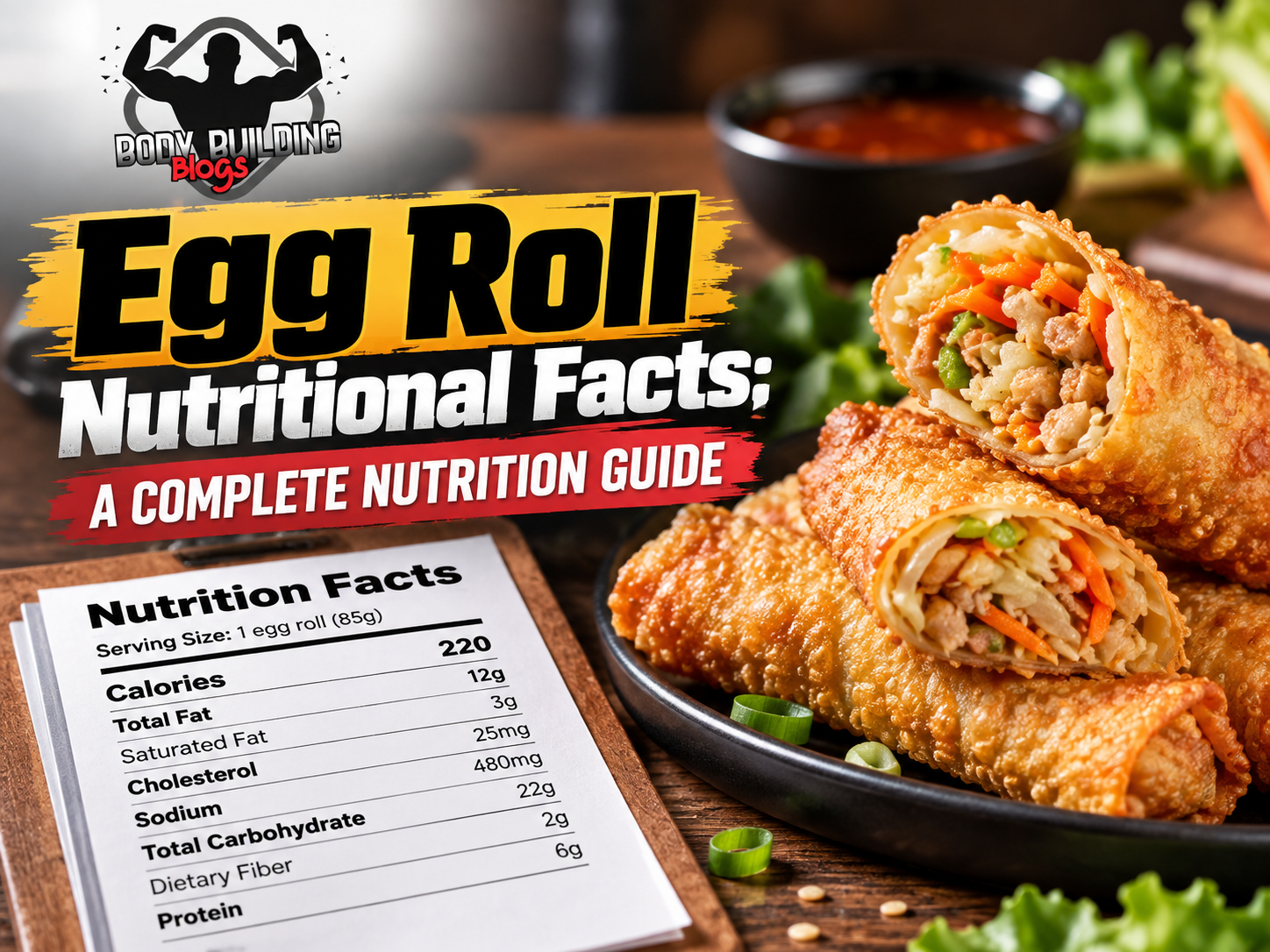
Understanding egg roll nutritional facts is essential whether you are watching your calorie intake, managing a specific health condition, or making informed choices at your favorite restaurant. If you are also exploring high-protein post-workout foods, knowing the nutritional value of an egg roll can help you balance your protein intake and recovery needs. A standard egg roll is a deep-fried appetizer typically containing vegetables and meat wrapped in a wheat-flour and egg-based skin, which significantly influences its calorie and fat content. While it is undeniably a beloved crispy treat, knowing what is inside that golden wrapper can help you decide how often to indulge.
Egg Roll Nutrition Breakdown: What’s Inside?
The nutritional profile of an egg roll varies depending on the filling and the size of the roll. Based on common commercial and restaurant preparations, here is a standard breakdown for a single egg roll.
Calories and Fat: The Frying Factor
The single biggest contributor to an egg roll’s calorie count is its cooking method. Egg rolls are deep-fried, which means the wrapper absorbs a significant amount of oil during the cooking process. While a chicken egg roll might provide 170 calories and 8 grams of fat, a fresh spring roll (which uses rice paper and is not fried) contains only about 60 calories and 1 gram of fat. Choosing lighter meals and incorporating effective fat-burning exercises into your routine can support your fitness goals. This stark contrast highlights how the preparation method defines the nutritional value of the dish.
Protein and Fiber: Modest Contributions
While egg rolls do contain some protein from meat, shrimp, or eggs, the amount is relatively modest—typically around 6 grams per roll . The fiber content is also low, usually ranging from 1 to 2 grams, because the wrapper is made from refined wheat flour . The vegetables inside, such as cabbage and carrots, do provide some fiber, but the small quantity limits its impact.
Healthier Alternatives and Comparisons
If you are craving the flavors of an egg roll but want to reduce the calorie and fat load, consider these alternatives.
Spring Rolls vs. Egg Rolls
Fresh spring rolls (sometimes called summer rolls or salad rolls) are a significantly lighter option. These are wrapped in translucent rice paper and served chilled or at room temperature, often filled with raw vegetables, herbs, and cooked shrimp . Because they are not fried, they can cut the calorie and fat content by more than half compared to a fried egg roll .
Preparation and Customization
When dining out, ask if the egg rolls are deep-fried or air-fried, as air-frying can significantly reduce oil absorption. Additionally, opting for a vegetable-filled egg roll without added meats can slightly lower calorie and saturated fat content. Making mindful food choices supports nutrition for mental health, while remembering that the wrapper and frying oil remain the primary sources of calories.
Pricing: What to Expect
The cost of egg rolls varies widely depending on the establishment and region.
- Street Food and Quick Service: In regions where egg rolls are a popular street food (such as India), a single egg roll or “Double Anda” roll can cost between ₹53 and ₹151 .
- Restaurant Pricing: In a sit-down restaurant or from a delivery service, prices can range from ₹80 for a single egg roll to over ₹175 for a double chicken egg roll .
- Grocery Store Frozen Options: Packaged frozen egg rolls sold in grocery stores are typically sold in multi-packs, bringing the per-unit cost down significantly.
Frequently Asked Questions (FAQs)
How many calories are in an egg roll?
A standard egg roll typically contains between 150 and 223 calories . The exact count depends on the size of the roll, the filling (vegetable, chicken, pork, or shrimp), and how much oil is absorbed during frying.
Are egg rolls healthy?
Egg rolls are generally considered a food to enjoy in moderation. They are deep-fried and relatively high in sodium and refined carbohydrates . However, they do contain some vegetables and protein, so they are not completely devoid of nutritional value.
What is the difference between an egg roll and a spring roll?
The main differences are the wrapper and preparation. Egg rolls use a wheat-flour and egg wrapper and are deep-fried, while spring rolls typically use a lighter rice-paper wrapper and are often served fresh (unfried) or lightly fried .
Which is healthier: an egg roll or a fresh spring roll?
A fresh spring roll is significantly healthier. Because it is not deep-fried and often contains more raw vegetables, it has fewer calories and less fat. A chicken egg roll can have 170 calories and 8g of fat, while a fresh spring roll may have only 60 calories and 1g of fat .
Does an egg roll contain a lot of sodium?
Yes. One egg roll can provide around 380 to 450 milligrams of sodium, which is roughly 16% to 19% of the daily recommended limit . This is largely due to the soy sauce, salt, and preservatives used in the filling and wrapper.

