

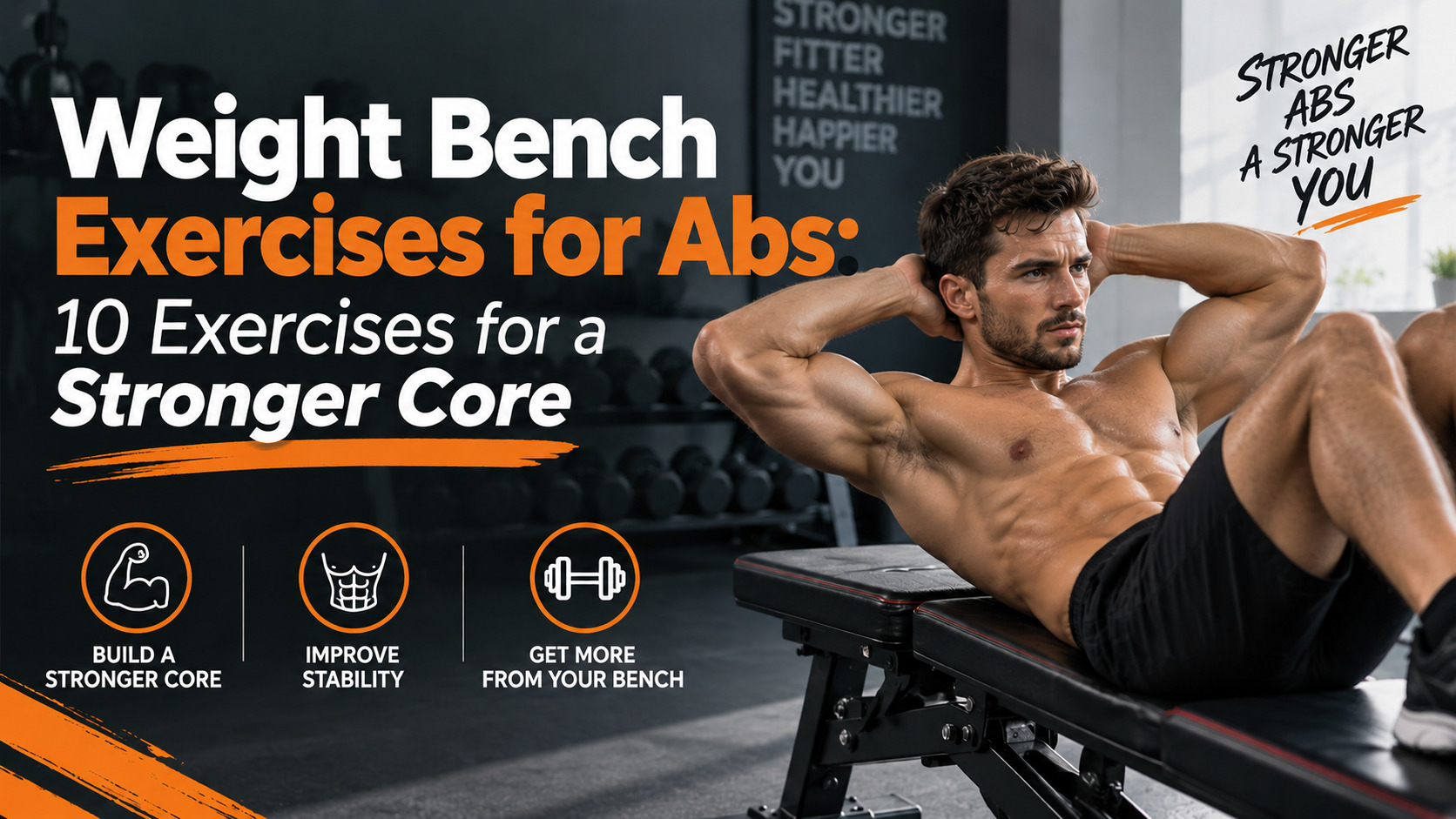
Weight bench exercises for abs transform a standard piece of gym equipment into a powerful core-training tool. Most lifters think of the bench only for chest presses, but that flat or adjustable surface provides unique leverage and stability that floor exercises simply cannot match. By anchoring your upper body or feet on a bench, you can increase range of motion, load the abs with added resistance, and target the rectus abdominis, obliques, and deep stabilizers from angles that bodyweight-only circuits often miss. While mental health nutrition supports overall well-being, combining proper nutrition with regular core training can help support a balanced and active lifestyle.
Below are 10 bench-based exercises that build a stronger, more defined core. Each entry includes the setup, execution cues, and the primary muscles worked.
Why Use a Weight Bench for Abs?
A bench offers three advantages over floor training: stability (so you can focus on contraction rather than balance), adjustability (decline angles increase the lever arm and range of motion), and loadability (you can hold dumbbells or plates without the weight restricting your movement). A flat bench supports reverse crunches and leg raises, while a decline bench amplifies crunches and sit-ups by forcing the abs to work through a longer arc.
10 Weight Bench Exercises for Abs
1. Reverse Crunch (Flat Bench)
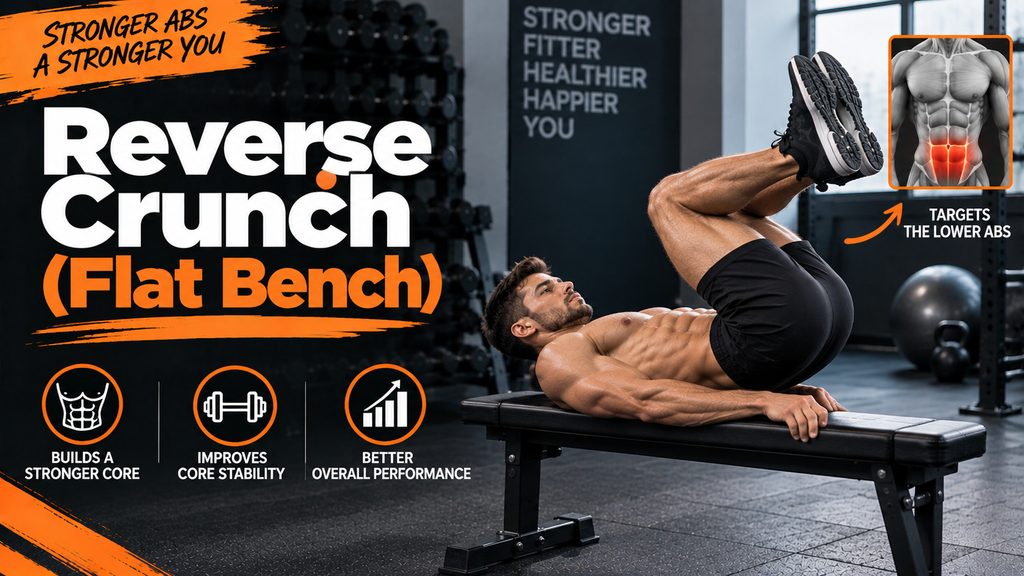
Lie face-up on a flat bench with your knees bent at 90 degrees and your shins parallel to the surface. Grip the underside of the bench behind your head. Keeping your upper body anchored, contract your abs to curl your knees toward your chest. Lower slowly without letting your feet touch down.
Targets: Lower rectus abdominis, hip flexors
Sets/Reps: 3 sets of 12–15
2. Decline Crunch

Set an adjustable bench to a 30–45 degree decline and secure your feet under the roller pads. Lie back with hands behind your head or crossed over your chest. Curl your torso upward by squeezing the abs, lifting your upper and mid-back off the bench while pressing your lower back into the pad. Lower under control.
Targets: Upper and mid rectus abdominis
Sets/Reps: 3 sets of 15–20
3. Weighted Decline Sit-Up
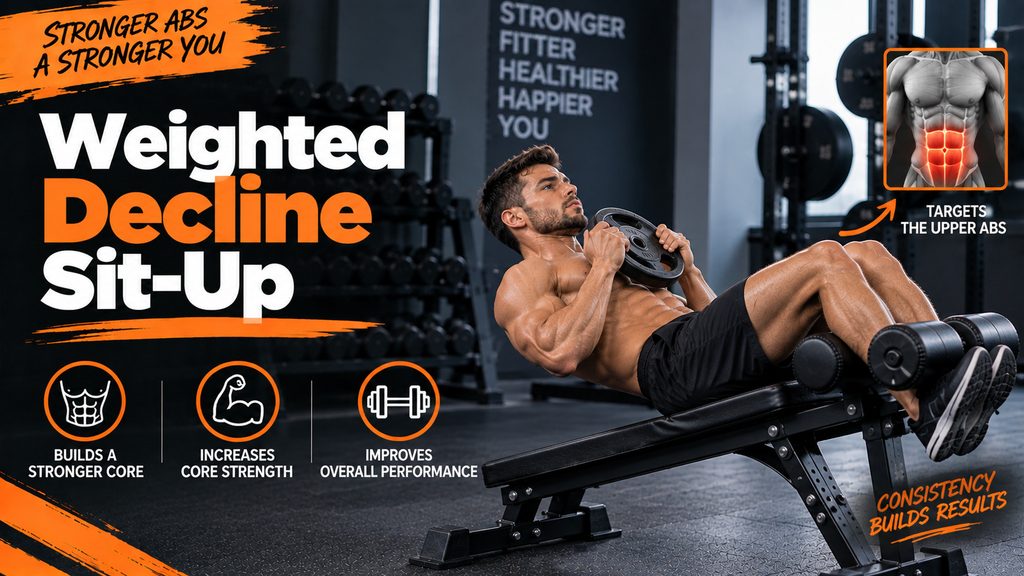
Anchor your feet on a decline bench and hold a dumbbell or weight plate against your chest. Brace your core and curl your torso up toward your knees, exhaling at the top. Lower for 2–3 seconds to keep tension on the abs throughout the eccentric phase.
Targets: Rectus abdominis, hip flexors
Sets/Reps: 3 sets of 10–12
4. Iron Cross Crunch (Flat Bench)
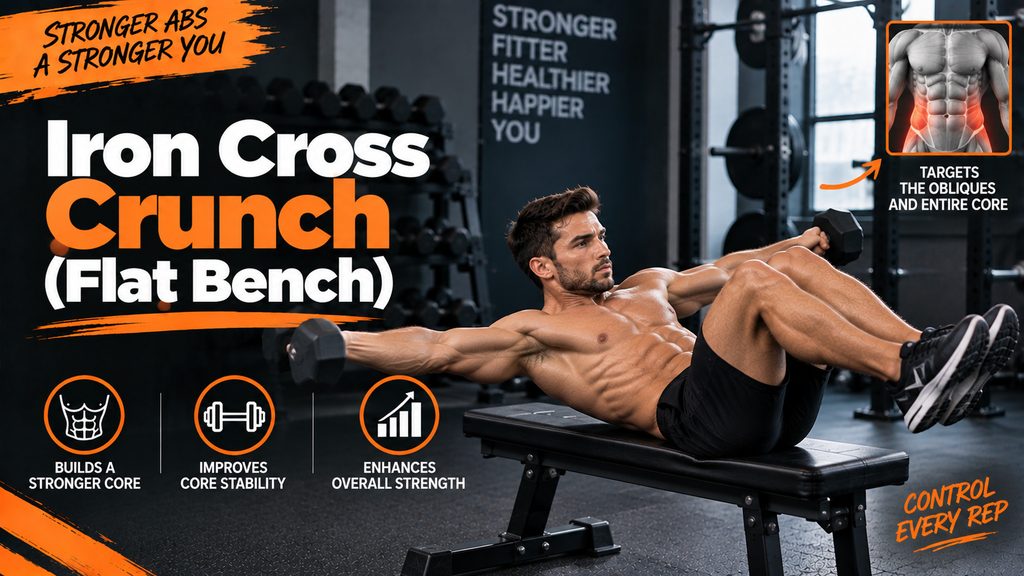
Lie face-up on a flat bench with your knees bent and feet together on the surface. Extend your arms straight out to the sides. As part of your back training workout, press your lower back into the bench and contract your abs to lift your shoulders and upper back. Squeeze at the top, then return with control.
Targets: Rectus abdominis, obliques
Sets/Reps: 3 sets of 12–15
5. Lying Leg Raise (Flat Bench)
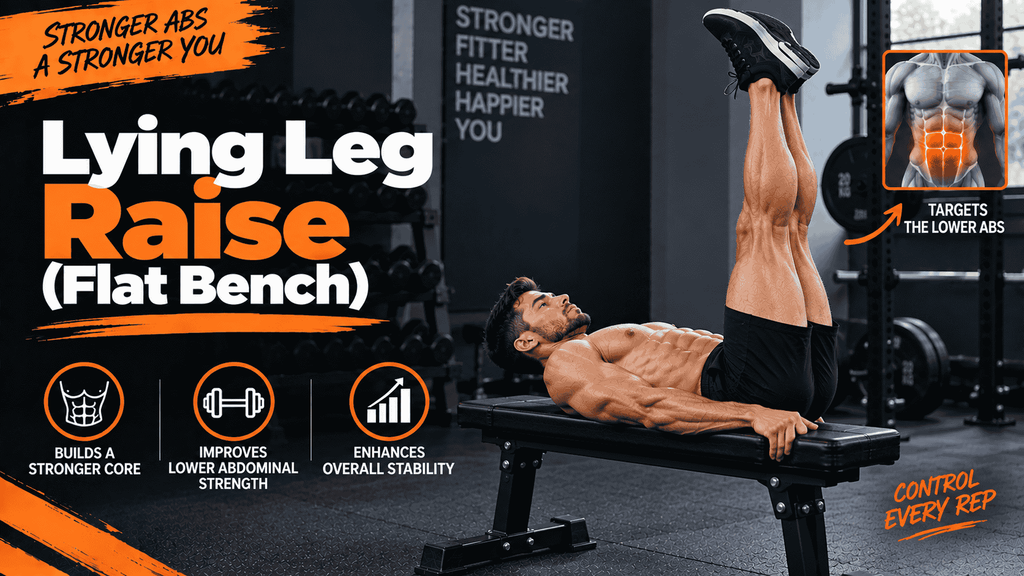
Lie lengthwise on a flat bench with your hips near the edge and grip the bench beside your head. Flatten your lower back into the bench by bracing your abs and tucking your pelvis slightly. Raise your legs together to vertical, then lower slowly to a low hover without letting your back arch.
Targets: Lower abs, hip flexors
Sets/Reps: 3 sets of 10–15
6. Copenhagen Side Plank (Bench-Supported)
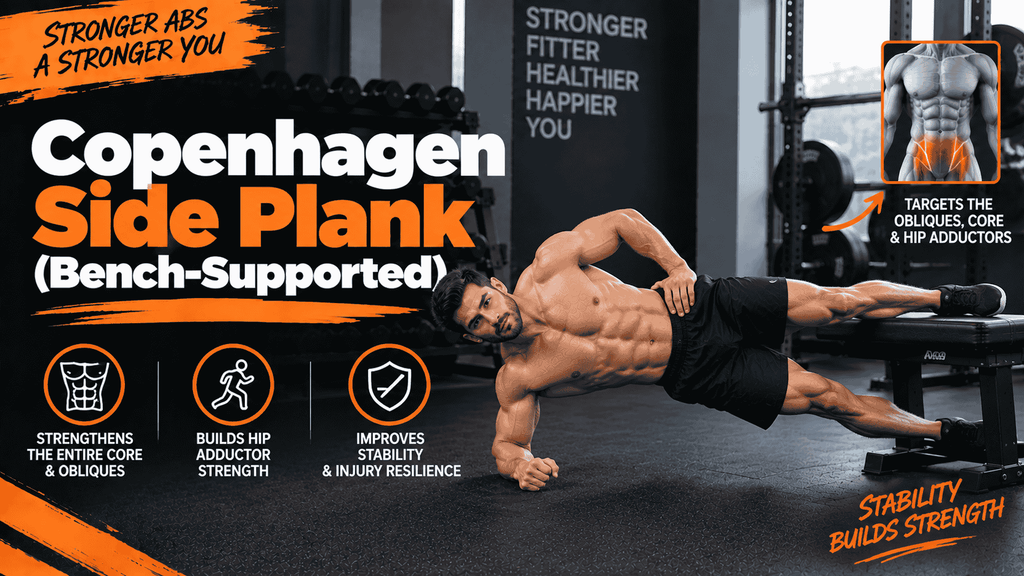
As part of your Dumbbell Pull Exercises routine, lie on your side perpendicular to a flat bench. Place the inner side of your top foot (or knee, for a regression) on the bench. Lift into a side forearm plank with your bottom leg hovering just above the floor. Hold for time, then switch sides.
Targets: Obliques, transverse abdominis, hip adductors
Sets/Reps: 3 holds of 20–30 seconds per side
7. Dragon Flag (Flat Bench)
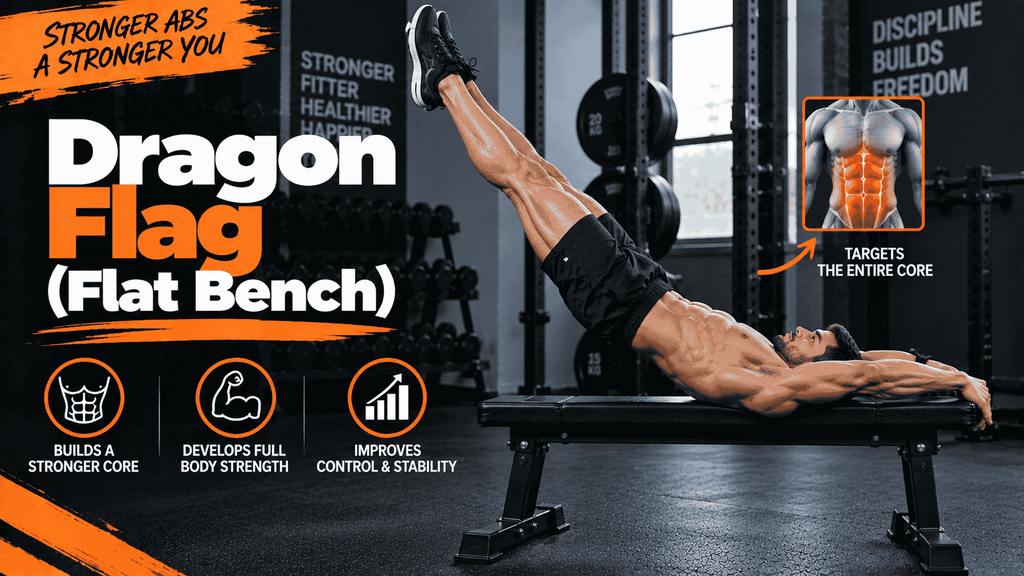
Lie face-up on a flat bench and grip the bench behind your head for support. Press your shoulders and upper back into the bench, squeeze your abs and glutes, and lift your entire body off the surface while keeping your torso rigid. Lower slowly—this is the hardest part—without letting your lower back arch.
Targets: Full rectus abdominis, deep core stabilizers
Sets/Reps: 3 sets of 5–8 (or use bent-knee variations)
8. Russian Twist (Decline Bench)
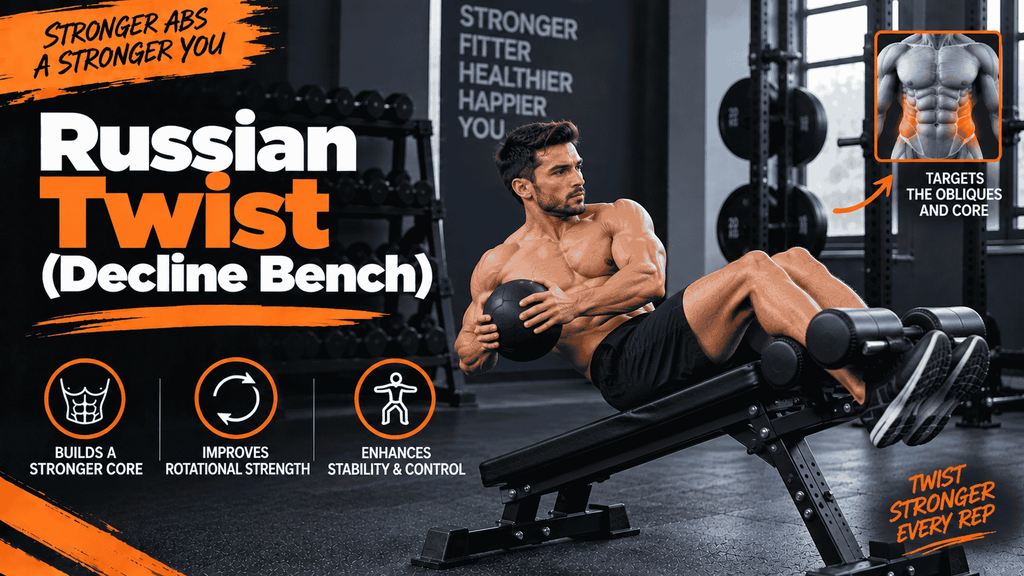
As part of a chest triceps workout, sit on a decline bench with your feet secured under the pads. Lean your torso back to roughly a 45-degree angle and hold a light dumbbell or medicine ball at your chest. Rotate your torso to one side, bringing the weight toward your hip, then rotate to the other side. Keep your hips square and the movement driven by the obliques, not the arms.
Targets: Obliques, rectus abdominis
Sets/Reps: 3 sets of 20 total twists (10 per side)
9. Weighted Twisting Crunch (Flat Bench)
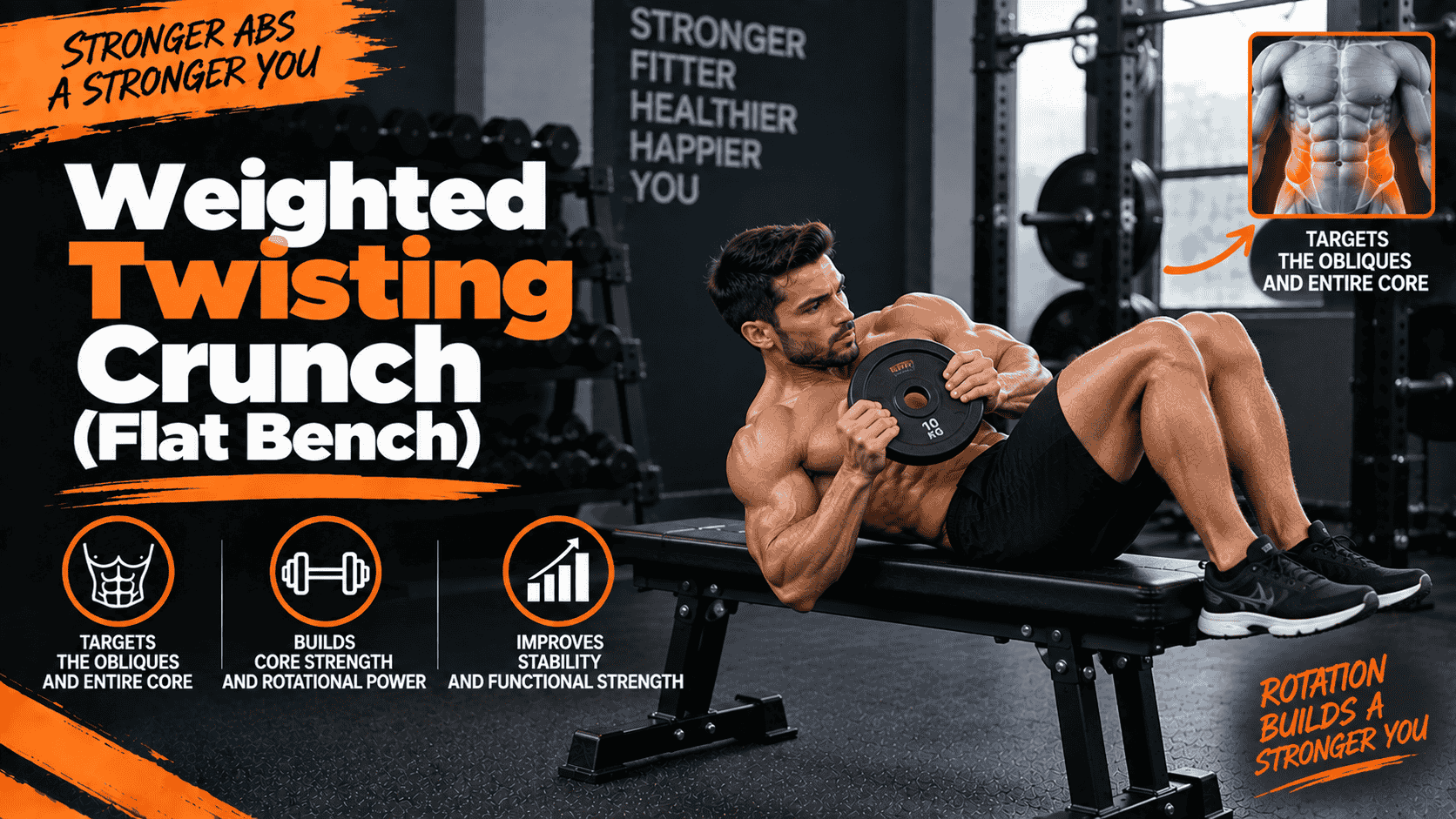
Sit on the end of a flat bench and place a light dumbbell securely between your feet or ankles. Grip the bench just behind your hips and lean your torso back slightly. Perform a controlled crunch while rotating your torso side to side, keeping your chest open and lower back protected.
Targets: Obliques, upper abs
Sets/Reps: 3 sets of 12–15 per side
10. Seated Leg Raise (Flat Bench)
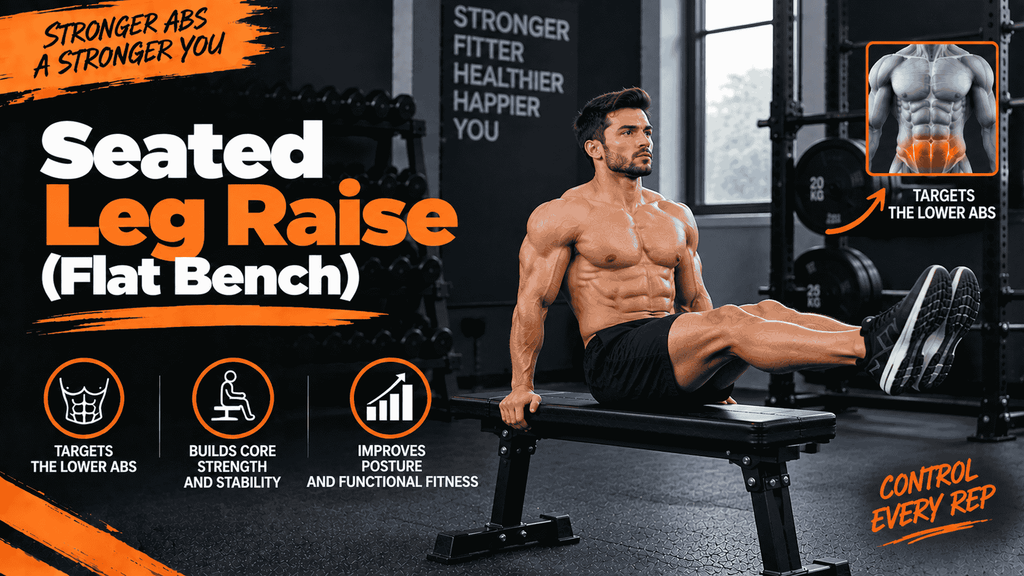
Sit on the end of a flat bench with your hands gripping the bench beside your hips. Lean your torso back slightly and extend your legs out in front of you. As part of a strength training system, without swinging, lift your legs up toward your chest, pause, then lower them under control. strength training system,
Targets: Lower rectus abdominis, hip flexors
Sets/Reps: 3 sets of 12–15
How to Program These Bench Ab Exercises
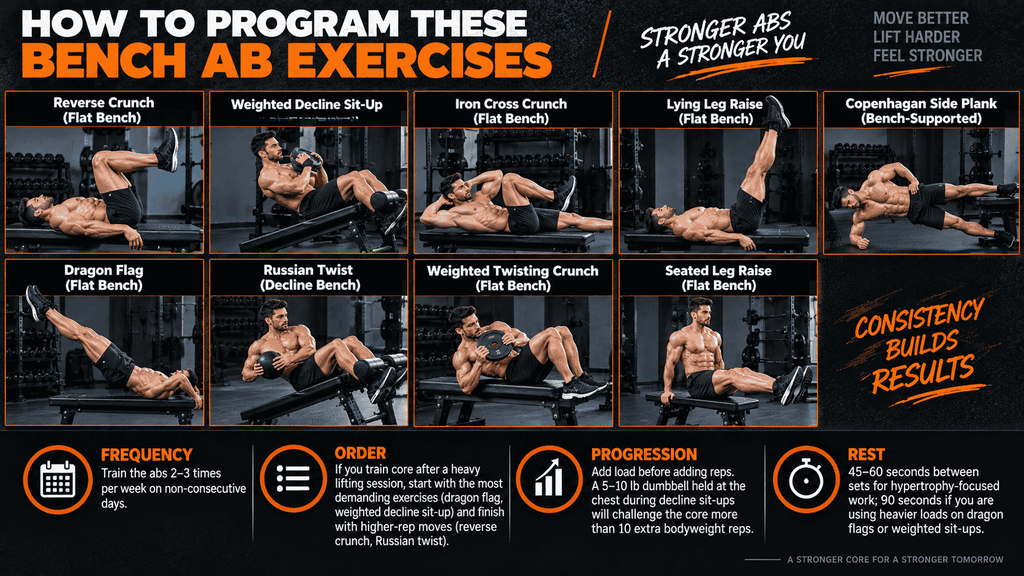
Frequency: Train the abs 2–3 times per week on non-consecutive days.
Order: If you train core after a heavy lifting session, start with the most demanding exercises (dragon flag, weighted decline sit-up) and finish with higher-rep moves (reverse crunch, Russian twist).
Progression: Add load before adding reps. A 5–10 lb dumbbell held at the chest during decline sit-ups will challenge the core more than 10 extra bodyweight reps.
Rest: 45–60 seconds between sets for hypertrophy-focused work; 90 seconds if you are using heavier loads on dragon flags or weighted sit-ups.
Frequently Asked Questions
Can you build abs with only a weight bench?
Yes. A bench plus bodyweight and light dumbbells is enough to train the core comprehensively. The decline angle and the ability to load weighted crunches and sit-ups provide sufficient progressive overload for most lifters.
Is a decline bench better than a flat bench for abs?
A decline bench can be a useful addition to a Home Abs Workout because it increases the range of motion for crunches and sit-ups, allowing the abs to work through a longer contraction arc. Flat-bench exercises like reverse crunches and leg raises are better for lower-ab emphasis and anti-extension control.
How many times per week should I do bench ab exercises?
Two to three sessions per week is optimal for most people. The abs recover relatively quickly, but they also assist in compound lifts like squats and deadlifts, so avoid training them hard on consecutive days.
Conclusion
A weight bench is one of the most versatile tools for core training. Weight bench exercises for abs can include using a flat bench for reverse crunches and dragon flags or a decline bench for weighted sit-ups and Russian twists. The key is to control the movement, progress the load, and train the abs with the same intent you apply to any other muscle group. Add two or three of these exercises to your routine, and you will build a stronger, more resilient core that carries over to every other lift.

