


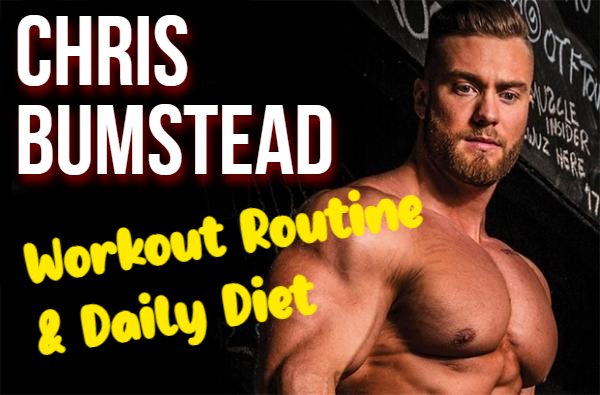
Chris Bumstead, or Cbum, is one of the most well-known names in bodybuilding today. Chris is a Canadian professional bodybuilder who competes in the IFBB’s Classic Physique division. His remarkable physique, disciplined lifestyle, and friendly demeanor have made him a global fitness icon.
Bumstead, who was born in Ottawa, Canada, on February 2, 1995, gained notoriety fast and has since solidified his status as one of the greatest Classic Physique champions of all time. He has established the benchmark for the ideal fusion of conditioning, mass, and beauty, having won the Mr. Olympia Classic Physique title five times in a row (2019–2023).
However, his championship-caliber physique is supported by a rigorous daily diet and exercise regimen, which are the keys to his success. This blog will give you an inside look at Chris Bumstead’s diet and training regimen, revealing how he shapes his body and supports his performance.
The Training Philosophy of Chris Bumstead
Chris Bumstead combines traditional bodybuilding techniques with a contemporary scientific method in his training regimen. His objective is to maintain balance, symmetry, and flow rather than just being as large as possible, in contrast to some mass monsters in the Open division.
His exercises focus on:
- Increasing weight or repetitions gradually is known as progressive overload.
- Form and Control: Complete range of motion, slow, controlled repetitions.
- Several sets of volume training are used to promote muscle growth.
- Mind-Muscle Connection: Concentrating on contracting and activating the working muscle.
Chris uses a push-pull-legs split and adds accessory days for weak areas like the arms or calves. He usually trains five to six days a week.
Chris Bumstead’s Weekly Exercise Schedule
His training schedule during the offseason or during preparation for a game is broken down as follows:
Day 1: Push (shoulders, triceps, and chest)
- 4 sets of 8–10 repetitions of the Incline Barbell Press
- Four sets of 8–12 repetitions for the flat dumbbell press
- 4 sets of 10–12 repetitions for the machine shoulder press
- Five sets of 12–15 repetitions for side lateral raises
- Extension of the Overhead Dumbbell Triceps: 3 sets of 12–15 repetitions
- Four sets of 12–15 repetitions of cable rope pushdowns
- Focus: Developing thick triceps, broad shoulders, and a full chest.
Day 2: Pull (Biceps & Back)
- Pull-ups with a wide grip: four sets to failure
- Barbell Rows: 4 sets of 8–10 repetitions
- Four sets of 12–15 repetitions for seated cable rows
- Four sets of fifteen repetitions of dumbbell shrugs
- Bicep curls with dumbbells: 4 sets of 12 repetitions
- Three sets of twelve repetitions of inclined dumbbell curls
- Focus: Arm symmetry, back width and thickness.
Legs (Quads, Hamstrings, Glutes, Calves) on Day 3
- Five sets of six to eight reps of squats
- Leg Press: 4 sets of 12–15 repetitions
- Romanian Deadlifts: 4 sets of 10 repetitions
- Leg curls: 4 sets of 12 repetitions, either seated or lying
- Three sets of twenty steps for walking lunges
- Five sets of 15–20 repetitions for standing calf raises
- Focus: overall leg balance, hamstring separation, and quad sweep.
Day 4: Arms & Shoulders (Accessory Day)
- Arnold Press: 4 sets of 10–12 repetitions
- Drop Set Lateral Raises: 5 sets of 15 repetitions
- Barbell Bicep Curls: 4 sets of 8–10 repetitions
- Skull Crushers: 4 sets of 10–12 repetitions
- Hammer curls: three sets of twelve repetitions
- Three sets of 12–15 repetitions for cable tricep kickbacks
- Focus: Highlighting the size and detail of the smaller muscle groups.
Day 5: Deadlifts and Posterior Chain
- Traditional Deadlifts: 5 sets of 5 repetitions
- T-Bar Rows: 4 sets of 8–10 repetitions
- Four sets of twelve reps for lat pulldowns
- Face Pulls: 4 sets of 12–15 repetitions
- Barbell Shrugs: 12 reps in 4 sets
- Focus: Total thickness and density of the back, with a particular emphasis on traps and erectors.
Day 6: Weak Point Training or Active Rest
Chris frequently uses this day for cardio, abs, or calves. He occasionally includes mobility and recovery exercises, particularly in the run-up to competitions.
Chris Bumstead’s Cardio Exercise Program
Chris regularly performs cardio to maintain his Classic Physique shape and conditioning, in contrast to some mass-focused bodybuilders.
- In the off-season: three to four days a week for 20 to 30 minutes of steady-state cardio, such as incline walking.
- Depending on his conditioning objectives, he may work out for up to 45 minutes every day or twice a day during prep.
Cardio ensures that he looks slender and attractive on stage by burning fat while preserving muscle.
The Daily Diet of Chris Bumstead
Chris Bumstead eats a diet that is high in protein, moderate in carbs, and moderate in fat, depending on whether he is bulking or cutting. He follows a healthy diet all year long, with modifications made closer to competition.
Here is an example of a daily meal plan:
Breakfast is the first meal.
- Five egg whites and five whole eggs
- One cup of berry-topped oatmeal
- One scoop of whey protein
- Goal: A nutrient-dense, high-protein beginning for energy and muscle recovery.
Second Meal: Mid-Morning Snack
- Eight ounces of chicken breast
- One cup of white rice
- Steam-cooked veggies
- Goal: Clean carbohydrates and lean protein to support training.
Meal 3: Pre-Workout Snack
- 8 ounces of lean ground turkey
- A cup or two of jasmine rice
- One tablespoon of almond butter
- Goal: Fats and carbohydrates for long-lasting energy during exercise.
Meal 4: Post-Exercise Meal
- One scoop of shaken whey isolate protein
- Two bananas or honey-topped cream of rice
- Supplemental creatine
- Goal: Fast-digesting carbohydrates and protein to boost recovery and restore glycogen.
Meal 5: Supper
- 10 ounces of steak or salmon
- A cup or two of sweet potatoes
- Green veggies
- The goal is to balance protein, carbohydrates, and omega-3 fatty acids to promote muscle growth.
Meal 6: Pre-bedtime meal
- One cup of casein protein or cottage cheese
- One tablespoon of peanut butter
- A tiny portion of seeds or nuts
- Protein that digests slowly to aid in recovery over night.
Chris Bumstead’s stack of supplements
Chris incorporates a variety of supplements into his daily regimen to aid in his performance and recuperation:
- Whey Protein Isolate: To aid in muscle repair.
- Creatine Monohydrate: Power and stamina.
- Pre-Workout: Concentrate and give it your all while training.
- BCAAs and EAAs: Maintaining muscle mass during exercise.
- Multivitamins: Micronutrients and everyday health.
- Fish oil is good for the heart and joints.
Chris regularly uses his own product line because he is also a co-owner of Raw Nutrition, his supplement business.
Contest Prep vs. Offseason
- The off-season diet consists of more carbohydrates and more calories overall (approximately 4,500–5,000 calories per day). Reduce your cardio and concentrate on building muscle.
- Diet for Contest Prep: Eat more protein, cut back on carbohydrates, and get up to 45 minutes of cardio each day. Depending on conditioning, the total number of calories decreases to approximately 3,000 to 3,500.
He dominates the Classic Physique division in part because of his ability to maintain discipline during preparation.
Recuperation and Lifestyle Practices
Chris’s success is largely attributed to his recovery, not just his diet and training.
- 7 to 8 hours of sleep each night is necessary for hormone regulation.
- Physiotherapy and massage: routine sessions to avoid injury.
- Mobility and stretching are particularly crucial for posing exercises.
- Posing Practice: Because Classic Physique is primarily evaluated on appearance, hours are spent each week honing presentation.
Why Chris Bumstead’s Daily Routine Is Effective
Chris’s routine is distinctive not only because of his discipline but also because it strikes a balance between athletic performance and aesthetic objectives. He doesn’t aim for sheer bulk like open bodybuilders do. Rather, he blends:
- Aesthetics of the Golden Age (wide shoulders, small waist).
- The science of modern training (volume plus progressive overload).
- Consistency in nutrition (healthy, well-planned meals).
By taking a comprehensive approach, he can continue to add size where necessary while maintaining the “classic look.”
In conclusion
In addition to being a five-time Mr. Olympia Classic Physique champion, Chris Bumstead is a role model for millions of people. His daily diet guarantees the best fuel for performance and appearance, while his exercise regimen prioritizes strength, form, and volume.
His balance is what distinguishes him; he strives to be the most symmetrical, beautiful, and comprehensive rather than the largest. His routine demonstrates how discipline, astute training, and perseverance can lead to bodybuilding success.
Keep in mind that Chris’s success didn’t happen overnight if you want to follow in his footsteps. It’s the outcome of years of diligent training, mindful eating, and a never-ending desire to get better. His techniques offer priceless insights for developing the ideal physique, regardless of your level of experience or desire to compete.

