
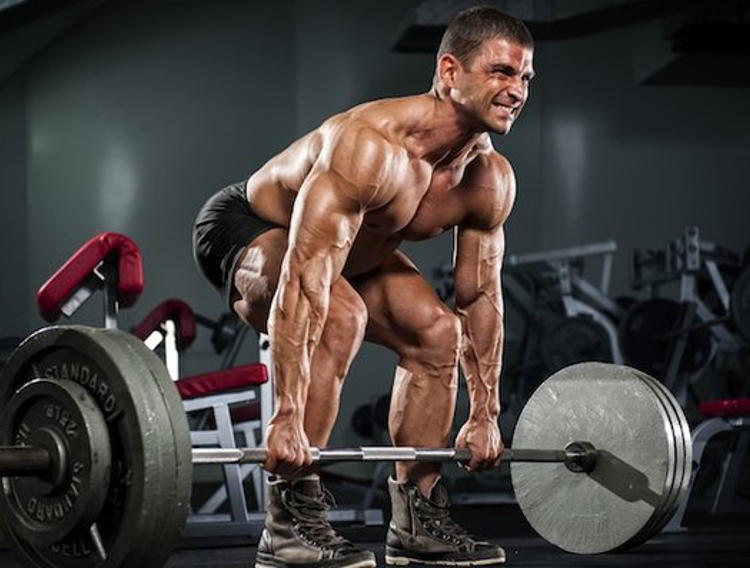
It’s common to refer to squats and deadlifts as the “king” and “queen” of lifts. These exercises are crucial to bodybuilding, powerlifting, and strength training because they increase muscular mass, lower body strength, and general athleticism. To improve at these lifts, most lifters focus on strengthening their legs or backs, but they typically undervalue the importance of their core.
The rectus abdominis, obliques, transverse abdominis, erector spinae, glutes, and hip stabilizers are among your core muscles. When combined, they offer spinal protection, bracing strength, and stability during strenuous deadlifts and squats. While a strong core protects your lifts, a weak core causes energy leaks, bad form, and an increased risk of injury.
This blog will discuss the importance of the core for squats and deadlifts as well as the best core exercises to increase strength, performance, and safety.
The Importance of Core Strength in Squatting and Deadlifting
Let’s examine how the core functions in these important lifts before we start the exercises:
- Spinal Stability: The spine is subjected to extreme compressive and shear forces when heavy bars are used. Your spine is stabilized by the core to avoid rounding or overextension.
- Intra-Abdominal Pressure (IAP): By bracing your core to create a rigid “cylinder” inside your torso, you can increase pressure and make lifting larger weights safer.
- Energy Transfer: The strength of the upper and lower bodies is connected by the core. Leg power must be transferred to the barbell effectively.
- Injury Prevention: Back injuries are more common in people with weak cores, particularly when rounding is a part of deadlifts.
- Explosiveness: Core stability increases bar speed, making it easier to lock out heavy pulls and squats.
The Greatest Core Workouts for Deadlifts and Squats
The four categories of these best core exercises are direct strength builders, anti-rotation, anti-extension, and anti-lateral flexion. When combined, they produce a midsection that is more stable and has stronger lifts.
1. Variations in Planks (Anti-Extension Strength)
By strengthening the deep stabilizing muscles in your core, planks assist you in keeping your spine in its neutral position when under load.
- Standard Plank: Tuck your hips in and keep your abs taut while holding a forearm plank.
- For the more difficult RKC Plank variation, squeeze your glutes, pull your elbows to your toes, and exert as much tension as you can.
- Shoulder taps provide stability against rotation on a plank.
Why It Helps: Improves the bracing technique required for deadlifts and squats.
2. Dynamic Anti-Extension Ab Wheel Rollouts
This exercise mimics the motion necessary to keep the spine in its neutral position under load. Keep your abs braced as you slowly roll forward with an ab wheel (or a barbell attached to a plate).
Why It Helps: It increases anterior core strength and endurance, which has a direct impact on the deadlift’s resistance to spinal extension.
3. Pallof Press (Strength Against Rotation)
Press the handle straight out while standing next to a cable machine or band anchor, then defy the pull.
The Advantages of It: During squats and deadlifts, it stops the body from rotating under load, which is important for balance. It fortifies deep stabilizers and obliques.
4. Front Rack Carry, Also Known as Farmer’s Carry
Walk slowly while holding a heavy barbell or kettlebells in the front rack position. Similar to squats, this exercise assesses the stability of your core under axial load.
Why It Helps: Enhances breathing mechanics under heavy loads, posture, and bracing strength.
5. Various Dead Bug Types
With your arms up and your knees bent at a 90-degree angle, lie on your back. Keep your lower back pressed into the floor as you slowly extend the opposing arm and leg.
Why It Helps: It strengthens spinal neutrality, which is a crucial component of bracing, and trains core stability with controlled breathing.
6. Side Plank with Anti-Lateral Flexion and Hip Lift
The hip stabilizers and obliques are strengthened by side planks. The lateral and gluteal stabilizers are activated more when a hip lift is added.
Why It Helps: By strengthening the obliques, it keeps them from collapsing side to side when performing heavy deadlift and squat loads.
7. Leg Raises That Hang
Maintaining a taut abs, raise your legs while hanging from a pull-up bar. Instead of swinging, concentrate on controlled motion.
Why It Helps: It improves posture during deadlifts by strengthening the lower abs and hip flexors.
8. Cable Crunches and Weighted Sit-Ups
This strengthens and enlarges the core muscles by increasing the size of the rectus abdominis. Lay a plate or cable machine across the chest.
Why It Helps: A brace that is more effective under maximum loads is the result of a stronger rectus abdominis.
9. Good Mornings (with an Emphasis on Core)
When done properly with lighter weights, good mornings, which are traditionally thought of as a posterior chain exercise, also require a lot of core stability.
Why It Helps: Enhances hip hinge mechanics for deadlifts, teaches bracing, and increases spinal erector endurance.
10. The Anti-Lateral Flexion Case: Suitcase Carry
Walk upright and without bending while holding a heavy dumbbell or kettlebell in one hand.
Why It Helps: By testing the obliques and lateral core muscles, it replicates the stability needed for unilateral forces in deadlifts and squats.
11. The Bird Dogs
Keep your hips square and extend the other arm and leg while on your hands and knees.
Why It Helps: Enhances balance, proprioception, and spinal stability—all of which are critical for preserving good posture during strenuous squats.
12. Front Squats
Even though the front squat is technically a squat, maintaining the torso upright requires a lot of core strength.
Why It Helps: Provides bracing for back squats and deadlifts while strengthening the anterior core.
A Core Exercise Example to Help You Get Better at Squats and Deadlifts
This simple exercise can be done twice or three times a week as accessory work or at the conclusion of your lifting session:
- Three sets of ten to twelve repetitions of ab wheel rollouts
- Three sets of 30 to 40 seconds per side are used to perform the Side Plank with Hip Lift.
- Three sets of 12–15 repetitions per side are used to perform the Pallof Press (Band or Cable).
- Three 30- to 40-meter front rack or farmer’s carry rounds
- Do three sets of 8–12 controlled repetitions for hanging leg raises.
Anti-extension, anti-rotation, anti-lateral flexion, and dynamic strength are all addressed by this blend.
Bracing: The Center That Is Hidden
Without talking about bracing technique, a discussion of core exercises for squats and deadlifts would be lacking. Learning how to use the core effectively is not the same as strengthening it.
How to Properly Brace:
- As you inhale deeply through your diaphragm, extend your abdomen rather than your chest.
- As though you were filling your torso with air, push your abs out in a 360-degree circle.
- Throughout the lift, keep your pressure constant and, if needed, let out some of your breath.
One can build automatic stability under heavy loads by practicing bracing with core exercises like planks, carries, and front squats.
Avoid These Common Errors in Core Training
- Crunches do not work the obliques, erectors, or deep stabilizers; they only work the rectus abdominis.
- Ignoring Anti-Movement Work: Stability issues, not weak “six-pack” abs, are the main reason why most heavy lifts fail.
- Overtraining the Core: The core requires recovery, just like other muscle groups. It is adequate to have two or three concentrated sessions per week.
- Ineffective Bracing Technique: If you have a strong core but no appropriate bracing, it’s like having armor but not knowing how to put it on.
Benefits Beyond Deadlifts and Squats
Enhancing your big lifts is one advantage of strengthening your core:
- Decreased Risk of Back Injury: The lumbar spine is shielded by a robust core.
- Improved Athletic Performance: Agility, jumping, and sprinting are all improved by core stability.
- Better Posture: Slouching and imbalances are lessened by strong obliques and erectors.
- Transfer to Other Lifts: Core stability is beneficial for Olympic lifts, bench presses, and overhead presses.
Concluding Remarks
Most lifters consider strengthening their quadriceps, hamstrings, or glutes in order to get better at squats and deadlifts. However, the core is the true secret weapon. Having the strongest legs in the world won’t help you at the bar if your midsection is unstable.
You can create a 360-degree shield around your spine by combining exercises like planks, rollouts, Pallof presses, carries, and hanging leg raises. You can increase your squat and deadlift numbers while maintaining your safety when lifting heavy objects if you combine this with the right bracing technique.
The strongest lifters have iron cores in addition to huge legs and backs. Your deadlifts and squats will increase to new levels if you train them properly.

