
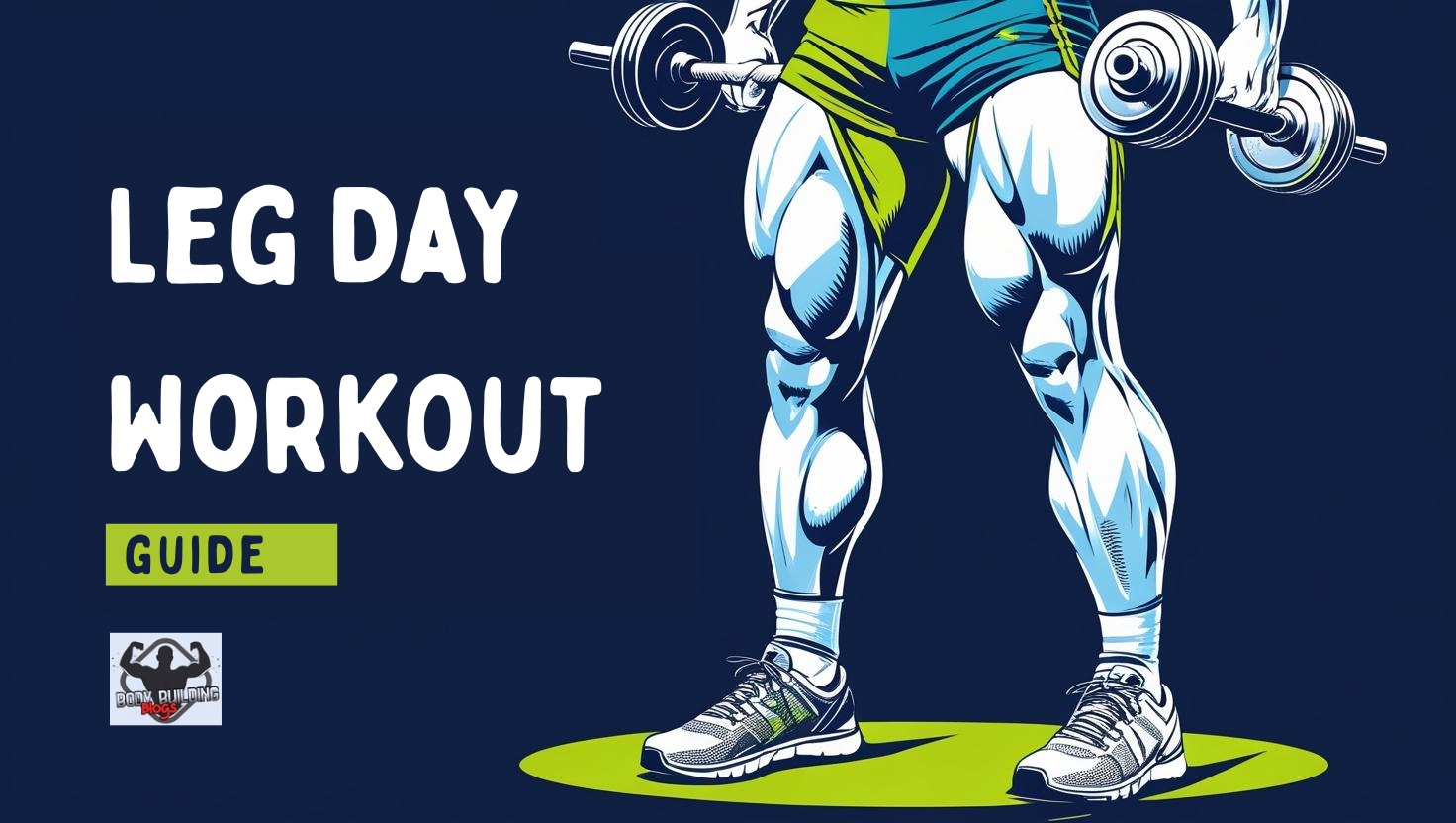
The most important—and dreaded—training day for building a strong, well-rounded body is leg day. True strength and athletic performance start at the very beginning, despite the temptation for many gym-goers to skip it in favor of arm or chest exercises. In addition to providing your base of support for movement, your legs are crucial for muscular balance, explosive power, and overall fitness.
A well-planned leg day workout not only increases size but also improves strength, power, and endurance. The anatomy of your leg muscles, the significance of leg day, and the most effective workout routines and exercises will all be covered in this guide. Regardless of your level of experience, you will gain strength, size, and power with this leg day workout plan.
Leg Day’s Importance
Missing leg day not only results in the infamous “chicken legs,” but it also lowers your athletic potential. Leg training has many benefits beyond appearance.
- Strength Foundation: Your legs provide force and propel your body forward in practically every sport, from running and jumping to lifting heavy weights.
- Hormonal Boost: Compound leg exercises like squats and deadlifts help you build muscle all over your body by promoting the release of growth hormone and testosterone.
- Symmetry and Balance: A balanced physique requires the development of both upper and lower body muscles. Neglecting the legs causes imbalances that affect posture and performance.
- Functional Fitness: Having strong legs makes it easier to walk, climb stairs, and lift weights.
- Explosive Power: Leg training is essential for athletes in sports like basketball, football, and sprinting in order to increase their speed and explosiveness.
The Anatomy of the Leg Muscles
You can exercise your legs more effectively if you are aware of their primary muscles:
- Quadriceps (front thigh): Running, lunges, and squats all require the quadriceps, four muscles in the front thigh that extend the knee.
- Hamstrings (back thigh): Flex the knee and extend the hip (important for sprinting and deadlifts).
- Glutes (buttocks): The largest muscle group and are responsible for hip extension, rotation, and power production.
- Calves (gastrocnemius and soleus): Give them ankle stability and a powerful push-off when they run or jump.
- Adductors (inner thigh): Stabilize the thighs and hips and prevent the knee from collapsing when moving.
A complete leg day workout should engage all of these muscles for balanced development.
The Basics of Leg Exercise
Before starting any exercises, keep the following in mind:
- Progressive Overload: Increase the weight, repetitions, or intensity gradually to continue building size and strength.
- Compound First, Isolation Second: Before moving on to isolating smaller muscles like calves, begin with large, multi-joint exercises like squats.
- Form Over Ego: Proper form helps to prevent injury and ensures that the right muscles are used.
- Rest and Recovery: Legs are large muscles that take time to heal. Give them at least 48 hours off between training sessions, which should occur once or twice a week.
The Greatest Leg Day Workout Routine
This comprehensive leg day program will help you build strength, size, and power. Adapt the repetitions and weights to your current fitness level.
Warm-up: Ten to Fifteen Minutes
- Leg swings, hip circles, and walking lunges are examples of dynamic stretches.
- Light aerobic exercises include five minutes of cycling, jumping rope, or treadmill jogging.
- Lighter weight sets for the warm-up.
1. Back Squat with Barbell (Size & Strength)
- Worked muscles included the quadriceps, hamstrings, glutes, and core.
- How to do it: With your feet shoulder-width apart, place a barbell on your upper back. Drive up through the heels after lowering the hips until the thighs are parallel, or lower.
- Set/Rep Ratio: 4 sets × 6–8 reps.
- Why it works: Squats, the ultimate leg workout, increase muscle mass and strength throughout the entire body.
2. Romanian Deadlift (Power of the Hamstrings and Glute)
- Muscles Worked: Lower back, gluteal, and hamstring.
- How to do it: Lower the bar while maintaining a straight back by hingeing at the hips with the barbell in front of the thighs. Return to standing after lowering until your hamstrings are stretched.
- Reps/Sets: 3 sets × 8–10 reps.
- Why it works: Increases hip drive and posterior chain strength.
3. Walking Lunges (Hypertrophy & Balance)
- Muscles Worked: The quadriceps, hamstrings, and glutes.
- How to do it: Lower your back knee near the floor as you step forward into a lunge. Step forward with the other leg and push up.
- Reps/Sets: Each leg consists of three sets of twelve reps.
- Why it works: Enhances single-leg strength, balance, and coordination.
4. Bulgarian Split Squat (Unilateral Strength)
- Muscles Worked: Quadriceps, glutes, and core.
- How to do it: Lower into a single-leg squat while holding dumbbells at your sides and placing your back foot on a bench.
- Reps/Sets: Each leg consists of three sets of ten repetitions.
- Why it works: Corrects imbalances and increases explosive power in each leg separately.
5. Leg Press (Volume & Mass)
- Muscles Worked: The quadriceps, hamstrings, and glutes.
- How to do it: Place your feet shoulder-width apart on the machine, push the weight up without locking your knees, and then carefully lower it.
- Sets/Reps: 12–15 reps × 4 sets.
- Why it works: Reduces spinal stress while increasing muscle growth through high-volume training.
6. Calf Raises (Definition and Stability)
- Muscles Worked: Calves.
- How to do it: Press through your toes to lift your heels as high as you can while standing on an elevated platform, then slowly lower them.
- Sets/Reps: 4 sets of 15–20 reps.
- Why it works: Increases explosive jumping power and ankle stability.
Optional Finishers: Sled Push or Box Jumps (Power & Conditioning)
- Sled Push: Put a sled on and propel it 20–30 meters forward with great force.
- Box Jumps: Leap upward and land gently on a stable platform.
- Sets/Reps: 3–4 sets × 8–10 reps, or 20–30 seconds of work.
- Why it works: Enhances explosive strength and athletic conditioning.
How to Get the Most Out of Leg Day Gains
- Concentrate on your entire range of motion because half reps restrict your strength and growth.
- Regulate the eccentric (lowering) phase: More muscle is developed during time spent under tension.
- Don’t ignore your posterior chain: Work your quadriceps, hamstrings, and glutes.
- Monitor your progress by recording your weights, sets, and repetitions.
- Nutrition is important: Use carbohydrates and protein as fuel for both performance and recuperation.
Typical Errors to Avoid on Leg Day
- Ignoring the Warm-Up: Cold muscles are more likely to sustain injuries.
- Overloading Weight: Using large weights improperly increases the risk of severe injury.
- Ignoring the glutes and hamstrings leads to imbalances and raises the risk of injury.
- Calves that are skipped develop their legs disproportionately.
- Poor Recovery: Progress is slowed when one does not stretch, sleep, or eat enough.
An Example of a Weekly Leg Training Split
- Option 1 (Full Body Split): Do leg exercises twice a week, such as deadlifts one day and squats the other.
- Option 2 (Push/Pull/Legs Split): Give your legs a full one to two sessions every week.
- Option 3 (Athlete Split): Switch between days with a lot of leg work (strength-focused) and days with a lot of power (power-focused).
Recuperation and Dietary Support for Leg Development
Leg exercises are hard and need to be properly recovered from.
- To aid in muscle repair, consume 1.6–2.2g of protein per kilogram of body weight.
- Glycogen stores are fueled by carbohydrates during intense training.
- Hydration: Strength and endurance are diminished by dehydration.
- For the best recovery, get 7 to 9 hours of sleep every night.
- Active recovery: Yoga, foam rolling, and light stretching increase flexibility and lessen soreness.
Concluding Remarks
Leg day is the foundation of strength, size, and power; it’s not just another workout. Devoting yourself to a structured leg day routine is essential, regardless of your goals—whether they are to enhance athletic performance, develop massive quadriceps, or tone your glutes.
You will become more balanced, powerful, and athletic in addition to stronger by combining heavy compound lifts, isolation exercises, and explosive movements. And even though it might be the hardest day of your training week, it also yields the best outcomes.
Remember this the next time you’re tempted to skip leg day: true strength begins at the very beginning. Train diligently, maintain consistency, and allow your legs to propel you to success.

